Wanhua 萬華

Showing posts with label Festivals. Show all posts

Ching Shui Tsu Shih’s Birthday

Ching Shui Tsu Shih’s Birthday

This celebration has been held annually since the construction of the temple over 100 years ago. In the past, performances known as “Ge Zai Xi” will be presented to the patriarch for a month and locals would cook “Pong Teng Ah”, prepare food such as sugar cake, yam ice, or present items like clayed dolls of Guan Gong. However, such activities are cancelled and today, the festival is significantly less massive.

Temple's Main Chamber

The celebration commences on 6th January of the Lunar Calendar, when people will visit the temple to enjoy the prepared food. Donation will also be encouraged and collected funds will be utilised to garner food ingredients so that food can be prepared for every visitor. The purpose of the celebration is therefore, also to provide food for the people, especially the needy. Other traditional Taoist rituals such as Dipper Worship (禮斗) will also be carried out. During this ritual, a large pale is filled with rice to signify good harvest, then a fan and a sword is inserted into the rice. They are all items to help build prosperity in the future.

0

Chin Shan King Sacrificial Ceremony

Chin Shan King Sacrificial Ceremony (艋舺大拜拜)

One of main festivals held annually in Wanhua is ”艋舺大拜拜”, also known as “青山王祭典”. The festival which occurs on 20th to 22nd of October (Lunar Calendar), is used to celebrate the birth of Chin Shan King (青山王), the main deity figure of the temple. During this period, the temple will invite Longshan Temple’s, Zhu Shi Miao’s (祖師廟), Ximending’s, Mazu Temple’s and other famous temples’ Bodhisattva/ Patriarch to hold a grand celebration within Wanhua. This involves touring Wanhua for the first 2 nights and on the last 2 days, holding a proper birthday celebration for the deity. This deity is widely prayed by the people in Wanhua for about 150 years. This is attributed to the locals’ belief that this deity can bring about peace and development as during the Qing Dynasty, praying this deity has resulted in the eradication of a massive plague in the area.

All Photo Source: http://blog.yam.com/kristen322/article/25749366
The purpose of touring Wamhua for the first 2 nights is assumed to be able to eliminate the evil spirits that brings locals bad luck and sufferings. As the evil spirits are believed to bring harm to the estate, children are prohibited from watching this ritual. Also, in fear that the evil spirits will enter the locals’ household, all windows and doors would have been shut by then.

Presently, there are three different tour routes. The first one commence from Huan He South Road to Zhong Hua Road while the second starts from the southern part of Wanhua Station. The last route begins from the northern portion of Ximending's Ting Han Kou Road. The parade usually last throughout the night and ends at 3-4 a.m. 


During the tour, other rituals such as “八將團” will also be carried out. 


This festival is one of the main traditional culture preserved in Wanhua not just for many years, but also practiced on a massive and impressive scale. To celebrate this event, some locals would even borrow money for a feast. A traditional biscuit known as "Xian Guang Bing"(餡光餅) is often given out to people. This can amount up to 2-3 million pieces each celebration. The Chin Shan King Sacrificial Ceremony is different from other religious practices. Apart from lighting up firecrackers, the hosts of the ceremony, known as "Ru Zhu" will be surrounded by the crowd. To be considered a "Ru Zhu", one will have to donate NTD 2 million and for "Tou Jia", NTD 1 million.

With a variety of traditional rituals, one would definitely find it amazing to witness the entire sacrificial ceremony.


Specific photo source: http://blog.yam.com/kristen322/article/25749366
0

Jia Na Festival

Jia Na Festival (萬華加蚋文化節)

All Photo Source: http://www.whdo.taipei.gov.tw
Massive beansprout picking event
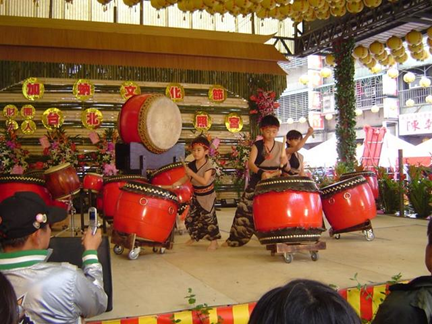
Jia Na Festival (加蚋文化節)is an annual festival celebrated by many Wanhua locals on March 12 (Lunar Calendar). It is usually commenced outside a temple before activities encompassing themes comprising forklore, sports, education, religion, business and aboriginal arts kick start the week. 


These multi-cultural events often attract large crowds of participants and on-lookers. At the same time, it also reminds participants of the past and traditional cultures which their ancestors once practiced. 

A lively festival cherished by many, a significant activity of this festival involves honoring the deity, 保仪大夫神 through having the temple troupes touring Wanhua’s area. In this past, locals pray to this deity in hope to exterminate pests that are destroying their crops. However, as the country progresses, the number of farmers have declined. Thus, most locals now pray in hope for peace and development. 

Religious rituals performed by temple troupes.
Apart from the religious rituals, different clubs and associations also get a chance to showcase their talents. For instance, performances by locals are varied, ranging from line dancing, modern contemporary dance to having live bands perform. Other community wide activities held include a massive beansprout-picking event. Having celebrated this festival for 13 consecutive years, it is proven that this festival holds a unique place the residents’ hearts.

Exhibitions showcasing hand braided products
Specific photo source: http://www.whdo.taipei.gov.tw/lp.aspctNode=3428&CtUnit=2062&BaseDSD=7&mp=124111
0

Lion Dance

Where to see lion dances: Chinese New Year, temple celebrations, store openings, third month of the Lunar calendar


The Lion Dance has slowly modified to become a fun spectacle during Chinese New Years and increasingly less valued as a cultural tradition. One teacher in Wanhua wants to change that thought and works with the local community to educate students young and old about the significance of the Lion Dance.

Teacher Gao (高文亮老師)
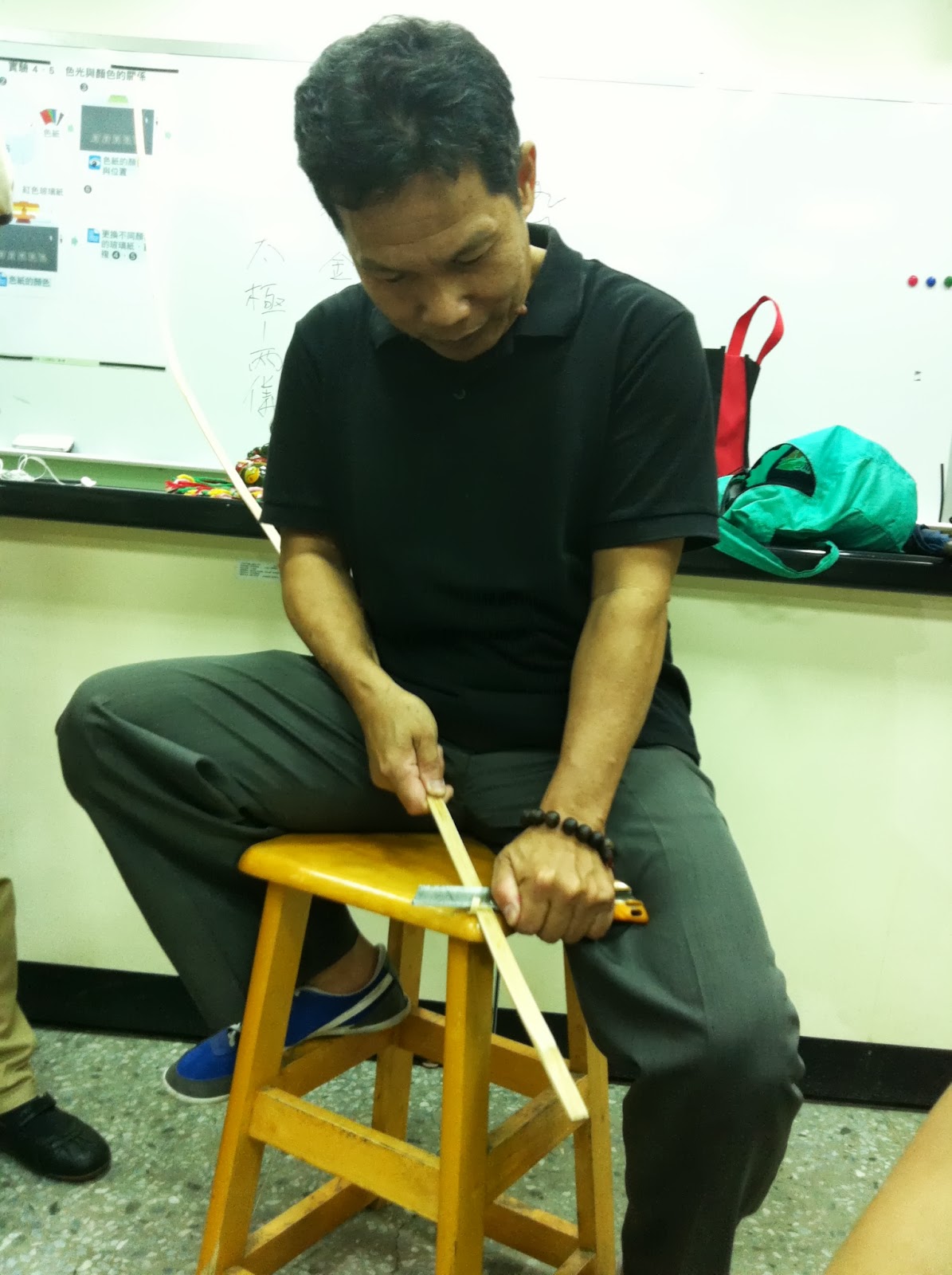
Teacher Gao (高文亮老) made clay lion masks for children to paint on while telling them legends about the lion. Slowly he was able to attract the attention of the children’s parents and spread the word to inform the community. He also teaches how to make life sized lion masks at the Wanhua Community College, hoping to pass on the skills he learnt from his master.


There are certain features of lion masks such as the three “mountains”, the mouth and the bagua symbol. The three “mountains” are the three bumps on the lion’s face including the forehead, the nose and the chin. The four corners of the mouth represent the oceans and the bagua symbol is to fight away demons.

Different explanations are told about the origin of the lion but the one he told us was that one evening the empress dreamed of the lion and drew it out. Then she ordered her servants to find the creature and they found the lion in the wild. Lion dance used to be a spectacle enjoyed exclusively in the Chinese emperor’s palace but slowly become a part of the local peoples’ lives.

So next time you see the lion dance, pay more attention and give thanks to those who are carrying on this tradition.

2